
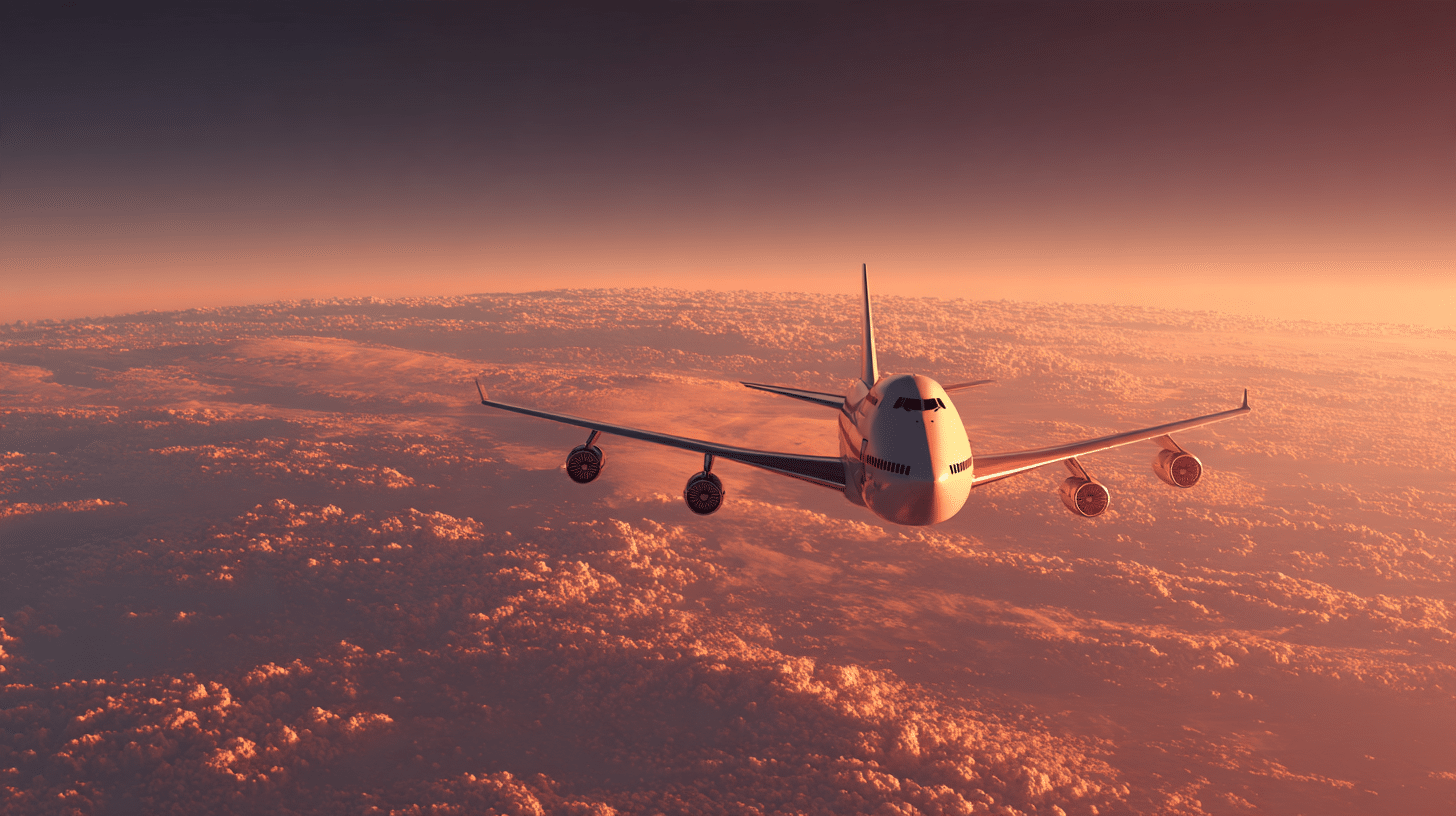
How long does it take to travel to Mars? It is the question every space-dreaming traveler asks, and the honest answer is somewhere between 6 and 9 months one way with current rocket technology. If you have ever stared at the night sky and wondered how long it would take to actually get to the Red Planet, you are in the right place. In this guide we break down the real travel times, the science behind them, and how to channel that wanderlust into adventures you can take right now here on Earth.
Table of Contents
- The Quick Answer: How Long Does It Take to Travel to Mars
- Why the Journey Time Varies So Much
- How Far Away Is Mars Really?
- Travel Times From Real Mars Missions
- Could We Make the Trip Faster?
- How Long Is a Round Trip to Mars?
- The Biggest Challenges of the Long Journey
- What You Would Pack for a Journey to Mars
- Channel Your Mars Wanderlust Into Earth Adventures
- Helpful Travel Resources
- Frequently Asked Questions
- Final Thoughts
The Quick Answer: How Long Does It Take to Travel to Mars
If someone asks you how long does it take to travel to Mars, the simplest answer is around seven months. Most robotic missions launched by NASA and other space agencies have taken between 150 and 300 days to reach Martian orbit or the surface.
That range exists because space travel is not a straight line. Both Earth and Mars are moving around the Sun at different speeds and distances. Engineers time launches for a window that keeps the trip as short and fuel-efficient as possible.
Here is the short version in numbers:
- Fastest realistic trip: roughly 6 months (about 180 days)
- Typical mission average: 7 months (about 210 days)
- Longer, slower trajectories: up to 9 months (about 270 days)
Why the Journey Time Varies So Much
When people ask how long does it take to travel to Mars, they assume there is one fixed number. There is not. The answer depends on three main factors that every mission planner wrestles with.
1. The Launch Window
Earth and Mars line up favorably only once every 26 months. This alignment, called opposition, is when the two planets are positioned so a spacecraft can travel the shortest practical path. Miss the window and you wait more than two years.
2. The Trajectory Chosen
The most fuel-efficient route is called a Hohmann transfer orbit. It is a long, curving arc that uses the least energy but takes the most time. Faster trajectories burn far more fuel and are far more expensive.
3. The Speed of the Spacecraft
A probe leaving Earth travels at roughly 24,600 miles per hour. Even at that blistering speed, the sheer distance between the planets means the trip still takes months, not days.
How Far Away Is Mars Really?
Understanding the distance helps explain the travel time. Mars is not always the same distance from Earth because both planets orbit the Sun on different paths.
- Closest approach: about 33.9 million miles (54.6 million km)
- Average distance: about 140 million miles (225 million km)
- Farthest point: about 250 million miles (401 million km)
A spacecraft never travels the straight-line distance, though. It follows a curved path to meet Mars where the planet will be when the craft arrives, not where it is at launch. This is why answering how long does it take to travel to Mars always involves orbital mechanics rather than a simple mileage calculation.
Travel Times From Real Mars Missions
History gives us the best real-world data. Here are a few famous missions and how long each one took to reach the Red Planet.
- Mariner 4 (1964): the first successful Mars flyby took about 228 days.
- Viking 1 (1975): reached Mars orbit in roughly 304 days.
- Mars Pathfinder (1996): landed after about 212 days.
- Curiosity Rover (2011): arrived in 253 days.
- Perseverance Rover (2020): touched down after 203 days.
Notice how almost every mission clusters around that six-to-ten-month window. Technology keeps improving, but the fundamental physics of the journey keeps the timeline remarkably consistent. This track record is why experts answer how long does it take to travel to Mars with such confidence.
Could We Make the Trip Faster?
Scientists are working hard to shrink that travel time, especially with human missions on the horizon. For crewed flights, a shorter journey means less exposure to radiation and less time away from Earth.
Nuclear Thermal Propulsion
Nuclear-powered engines could cut the trip to roughly three to four months. By heating propellant far more efficiently than chemical rockets, these engines promise dramatically higher speeds.
Advanced Ion and Plasma Drives
Electric propulsion systems accelerate continuously over long periods. While gentle at first, they could eventually reach speeds that slash months off the journey.
The Dream of a 39-Day Trip
Some experimental concepts, like VASIMR plasma rockets, suggest a future trip as short as 39 days. That technology is still theoretical, but it shows how quickly the answer to how long does it take to travel to Mars might change in coming decades.
How Long Is a Round Trip to Mars?
Knowing how long does it take to travel to Mars one way is only half the story. A crewed round trip is a very different kind of commitment, and it stretches the timeline from months into years.
A realistic human mission would likely look like this:
- Outbound journey: roughly 7 months to reach Mars.
- Surface stay: around 15 to 18 months waiting for the planets to realign.
- Return journey: another 7 months back to Earth.
Added together, a complete human mission could last two and a half to three years. That long surface stay is not optional sightseeing time. Astronauts must wait for the next favorable launch window before they can safely head home, which is why the round-trip answer dwarfs the one-way figure.
This extended timeline is exactly why space agencies invest so heavily in life support, food storage, and crew psychology. Spending three years in a confined spacecraft and a Martian habitat is as much a mental challenge as a technical one, and it reshapes how engineers think about the entire mission.
The Biggest Challenges of the Long Journey
The length of the trip creates problems that a quick flight simply never faces. Understanding these hurdles makes the seven-month figure feel even more impressive.
Radiation Exposure
Outside Earth’s protective magnetic field, travelers are exposed to cosmic radiation for the entire journey. The longer the trip, the higher the dose, which is one more reason engineers want faster rockets.
Food and Water Supply
There are no grocery stores between planets. Every meal for a multi-year mission must be packed in advance or grown on board, making efficient packing a literal matter of survival.
Muscle and Bone Loss
Months in low gravity weaken the human body. Astronauts exercise for hours every day just to stay healthy enough to function when they arrive. The answer to how long does it take to travel to Mars directly affects how much their bodies can endure.
What You Would Pack for a Journey to Mars
Imagine packing for a seven-month voyage with no resupply stops. Space travelers obsess over every ounce, and smart Earth travelers can learn a lot from that mindset. Whether you are crossing the solar system or just crossing a border, packing light and smart matters.
Durable, meaningful gear goes a long way on any long journey. A rugged, comfortable hat is a staple for explorers of every kind, which is why our Vietnam Veterans Embroidered Cotton Baseball Hat makes a thoughtful companion and a great gift for the adventurer in your life.
For those who like to carry a little symbolism on their travels, the Tree of Life Turquoise Beaded Necklace represents growth, connection, and the roots we carry with us even when we roam far from home. And when you want to add a touch of sparkle to an evening under unfamiliar stars, the Sequin Glamour Scarf is lightweight, packable, and effortlessly chic.
Want something uniquely yours for the trip of a lifetime? Explore our Custom Design service to create travel gear that tells your own story.
Channel Your Mars Wanderlust Into Earth Adventures
Now that you know how long does it take to travel to Mars, you can appreciate just how patient a space traveler has to be. Until commercial trips to Mars become reality, Earth still has plenty of otherworldly destinations. The red deserts of Jordan, the volcanic landscapes of Iceland, and the high Himalayas all feel like another planet.
If the mountains are calling, start planning with our guide to the 10 Essential Hotels to Stay in Nepal, where the thin air and towering peaks offer the closest thing to a Martian horizon you can find on Earth.
Before any big journey, protect your plans. Our Complete Guide: 7 Proven Tips for Travel Insurance walks you through everything you need to travel with peace of mind, whether you are heading across the globe or dreaming of the cosmos.
Ready to map out your next mission? Use our free Travel Planner to organize itineraries, bookings, and bucket-list destinations all in one place. You can also browse our full range of Travel Apparel – Stunning Adventure Fashion to gear up for whatever adventure comes next.
Helpful Travel Resources
Space travel may be years away, but these trusted resources make earthly travel smoother and safer right now.
- Compare flights and routes with Sales to find the best deals before you fly.
- Rent a car at your destination through Local for flexible exploring.
- Stay connected worldwide with an eSIM from Airalo.
- Book tours and experiences via Viator.
- Protect your trip with Travel insurance from Allianz.
For readers who care about the wider world, these humanitarian and international organizations do important work across the globe: the ICRC, ECOWAS, Plan International, and the IOM. You can also follow our journey on Next Door and read more stories on our Substack. And of course, keep your itinerary organized with the Travel Planner.
Frequently Asked Questions
How long does it take to travel to Mars with current technology?
With today’s chemical rockets, it takes about six to nine months to travel to Mars one way. Most missions average around seven months, depending on the launch window and the trajectory chosen.
Why does the trip to Mars take so long?
The trip takes months because spacecraft follow a curved, fuel-efficient path called a Hohmann transfer orbit rather than a straight line. Both Earth and Mars are constantly moving, so the craft must aim for where Mars will be at arrival.
Could humans ever travel to Mars faster than seven months?
Yes. Future technologies such as nuclear thermal propulsion and plasma rockets could reduce the journey to three to four months, and some experimental concepts even suggest a trip as short as 39 days.
Final Thoughts
So, how long does it take to travel to Mars? The answer today is roughly six to nine months, but tomorrow’s technology may change that entirely. The dream of reaching the Red Planet reminds us that curiosity and adventure have no limits.
While you wait for the stars to align, there is a whole planet to explore right here. Gear up, plan smart, and travel boldly. 🚀 Visit Around The World In A Rush to discover travel apparel, tips, and tools that make every adventure unforgettable. ✈️🌍
Tags: #HowLongDoesItTakeToTravelToMars #MarsTravel #SpaceTravel #TravelDreams #AdventureTravel #AroundTheWorldInARush