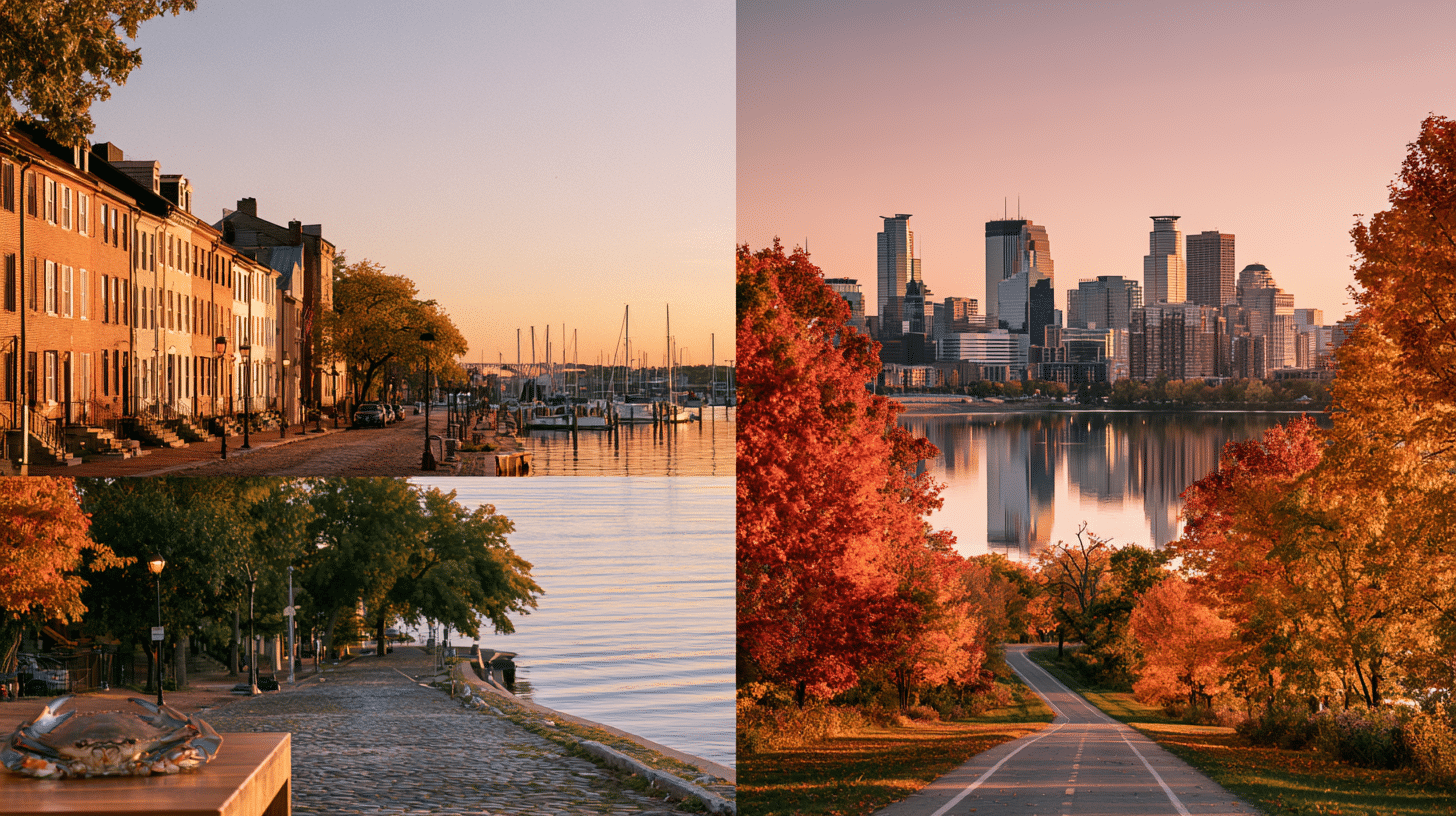
The Orioles vs Twins matchup is drawing 20,000+ searches today, and for good reason — both teams are having compelling 2026 seasons. But the real story is the cities they represent. Baltimore, Maryland is one of America’s great comeback cities: raw, authentic, culturally rich, and increasingly recognized as one of the most exciting urban food and arts destinations on the East Coast. Minneapolis, Minnesota is routinely underestimated by Americans who have never been — and routinely adored by everyone who has. Together they make one of the best hypothetical road trips in American baseball.
Baltimore: The City That’s Always Been Cooler Than You Think
Baltimore has been unfairly defined by its challenges for too long. The reality is a city of extraordinary neighborhoods, one of the best crab feasts you will ever attend, a booming arts scene, and a historic waterfront that launched American shipbuilding and trade.
- Camden Yards — Opened in 1992, Camden Yards invented the retro ballpark movement that transformed stadium design across American sports. Still one of the most beautiful ballparks ever built, with the B&O Warehouse defining its rightfield backdrop and Eutaw Street’s home run markers embedded in the walkway.
- Blue crabs at LP Steamer or LP Steamers — Maryland steamed crabs seasoned with Old Bay are one of the great American culinary experiences. A picnic table, brown paper, wooden mallets, and a dozen blue crabs is how summer in Baltimore works. This is non-negotiable.
- Fells Point — The cobblestone waterfront neighborhood where Baltimore was founded in 1763, now home to independent bars, Federal Hill oyster shacks, the Broadway Market, and the kind of neighborhood energy that reminds you what cities are for.
- The Baltimore Museum of Art — Home to the world’s largest collection of Henri Matisse works, free admission, and extraordinary American and decorative art collections. One of the genuinely great free art museums in America.
- Lexington Market — America’s oldest continuously operating market (1782), recently renovated and rebounding, with Faidley’s Seafood serving the best crabcakes in the world since 1886.
Minneapolis: America’s Most Livable City Just Got Even Better
Minneapolis is perennially ranked among the most livable cities in the United States — walkable, bikeable, culturally vibrant, and home to one of the country’s most extraordinary arts-per-capita ratios. Yes, it’s cold in winter. The city was built for it.
- Target Field — One of the most beloved open-air stadiums in the American League, built in downtown Minneapolis and integrated into the city grid. The limestone exterior, Minneapolis skyline backdrop, and genuinely excellent food concessions (local vendors only) make it a destination in its own right.
- The Minneapolis Institute of Art — Over 90,000 works spanning 5,000 years, free admission, in a stunning Beaux Arts building. The MIA’s collection of Asian art and American decorative arts is world-class.
- The Boundary Waters Canoe Area Wilderness — Three hours north of Minneapolis, the BWCAW is one of the last true wilderness canoe areas in America: over a million acres, more than 1,000 lakes, and paddling routes that can take you days from the nearest road. The most extraordinary outdoor experience in the Midwest.
- North Loop neighborhood — Minneapolis’s trendiest neighborhood occupies former warehouse buildings between downtown and the Mississippi River, with a concentration of acclaimed restaurants, rooftop bars, and weekend farmers markets that make it the city’s most exciting dining district.
- Minnehaha Falls and the Grand Rounds Scenic Byway — Minneapolis’s 53-mile continuous parkway system connecting all major parks, lakes, and natural areas — the most remarkable urban park network in America. Rent a bike and follow the chain of lakes (Calhoun, Harriet, Cedar, Nokomis) for the essential Minneapolis outdoor experience.
From Baltimore’s blue crabs to Minneapolis’s pristine lake system, both cities are destinations that reward the traveler who goes beyond the obvious. Our Motivational Travel Hoodies at Around The World In A Rush are built for East Coast waterfront evenings and cool Minnesota mornings. And our Flag & Country Pride Collection lets you carry your city pride wherever the baseball road takes you.
Frequently Asked Questions
Q1: Is Baltimore safe for tourists visiting Camden Yards and the Inner Harbor?
The areas around Camden Yards, the Inner Harbor, Fells Point, and Federal Hill are well-traveled tourist destinations and generally comfortable for visitors. The Inner Harbor and Fells Point are the most tourist-oriented and among the safest areas of the city, particularly during daytime and early evening hours when restaurants and bars are active. As with any major American city, stay aware of your surroundings, use rideshare or the Charm City Circulator (a free bus connecting major attractions) after dark, and stick to the well-lit, populated corridors. Camden Yards itself is very well-serviced by the MARC train and the Light Rail’s Camden station directly adjacent to the ballpark.
Q2: When is Minneapolis coldest and how cold does it actually get?
Minneapolis winters are legitimately cold — average January highs of 24°F (-4°C) with wind chill making it feel significantly colder, and the city regularly sees temperatures below 0°F (-18°C) several times each winter. The flip side: Minneapolis is extraordinarily well-prepared for its climate, with the Skyway System (an 80-block heated indoor pedestrian network connecting downtown buildings), world-class winter festivals including the St. Paul Winter Carnival, and a culture that embraces winter rather than hiding from it. Summer (June–August) is genuinely beautiful: warm, long days, lake swimming, and outdoor music festivals. Visit in September for fall colors on the chain of lakes — arguably Minneapolis’s most beautiful season.
Q3: How do I get to the Boundary Waters Canoe Area from Minneapolis for a weekend trip?
The Boundary Waters are approximately 3–3.5 hours north of Minneapolis via US-169 or MN-53. The gateway town of Ely, Minnesota is the most common base camp for BWCA trips, with outfitters who provide canoes, camping permits, food packs, and guided services. A BWCA permit is required for overnight trips and must be reserved in advance — permits for popular entry points sell out months ahead. For a first-time visit, contact outfitters like Piragis Northwoods Company in Ely for complete guided packages that handle all permits, equipment, and logistics. Day paddling at the edge of the wilderness is also possible without an overnight permit.
3 Essential Resources
- Visit Baltimore — Official Tourism Guide — Neighborhoods, crab shack guides, Camden Yards information, and everything you need for a Baltimore visit.
- Meet Minneapolis — Official Convention and Visitors Association — Neighborhoods, Grand Rounds cycling maps, restaurant guides, and seasonal event calendars for Minneapolis.
- Boundary Waters Canoe Area — USDA Forest Service — Permit information, entry point maps, regulations, and everything you need to plan a wilderness canoe trip in America’s most extraordinary paddling destination.
Conclusion
Baltimore and Minneapolis are both cities that have been underestimated, undervalued, and overlooked by American travelers chasing the same coastal bucket list. Both cities will surprise you. Both will feed you extraordinarily well. Both have baseball teams playing inspired ball in 2026. And both are proof that the most rewarding American travel often happens in the cities no one thinks to put on their list — until suddenly everyone does.
👉 Find your next surprise destination at Around The World In A Rush — travel apparel for people who know the best places are the ones everyone else is sleeping on.
Tags: #Orioles #Twins #BaltimoreTravel #MinneapolisTravel #CamdenYards #TargetField #BlueCrabs #BoundaryWaters #MLBTravel #BaseballRoadTrip #TravelTrends2026 #AroundTheWorldInARush #FlagPride