
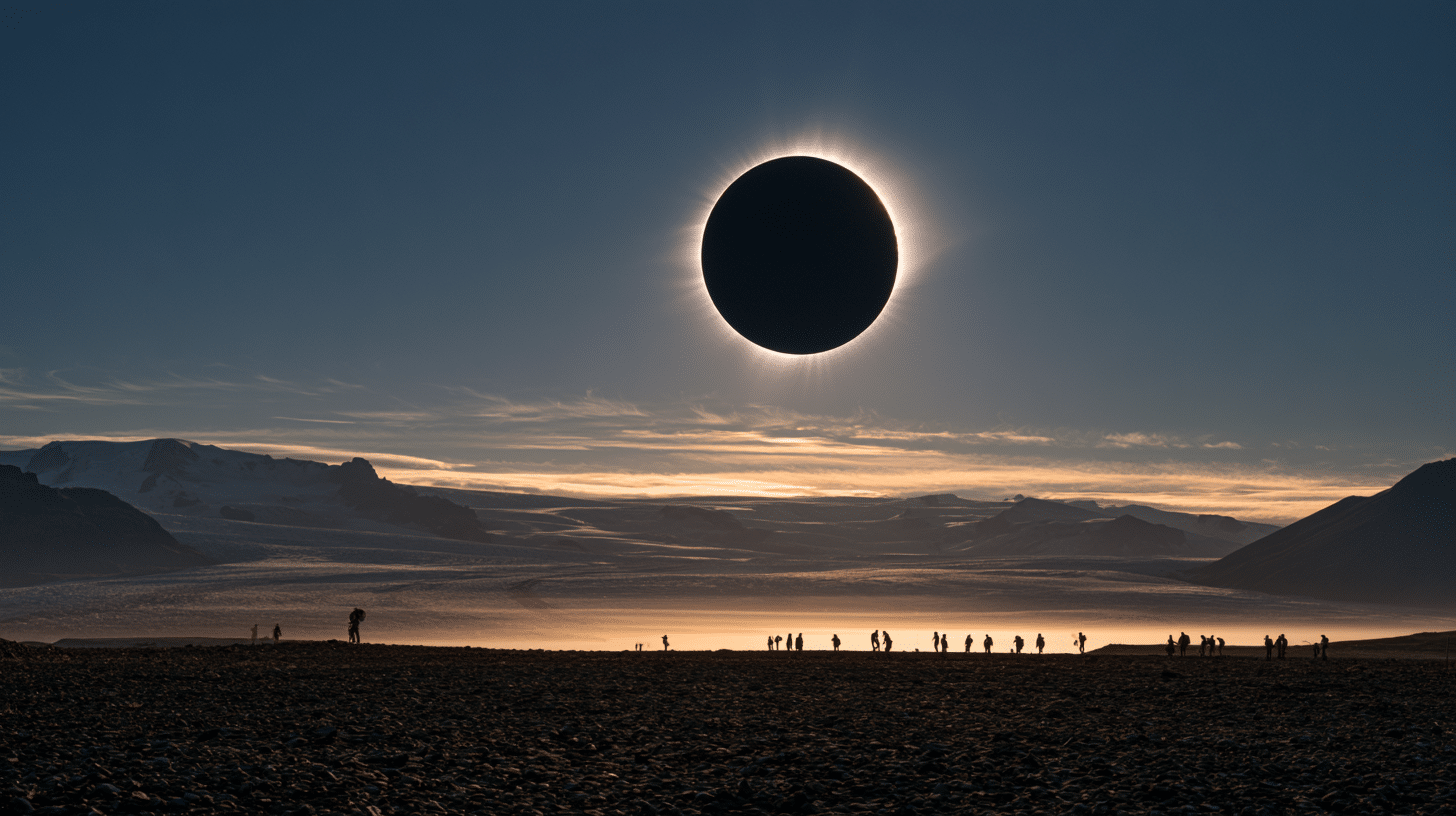
The single biggest search query in America right now is “what time is the solar eclipse on August 12” — 200,000+ searches and climbing. Today’s total solar eclipse is one of the most anticipated celestial events of the decade, and the path of totality carves a dramatic arc across Iceland, Greenland, and northern Spain.
The Path of Totality: Where Darkness Falls
- Iceland — Western Iceland including areas near Reykjavík fall within the path. Volcanic landscapes, glaciers, and Northern Lights season beginning late August make it a double-header for sky watchers.
- Greenland — The most remote viewing location. Access via Kangerlussuaq or Nuuk with limited flights, but standing on the world’s largest island watching the sun vanish is unmatched.
- Northern Spain — The most accessible option. The path crosses Galicia, Asturias, the Basque Country, and the Pyrenees, with warm August weather and world-class food.
- Partial views — The UK, Ireland, Portugal, France, and northeastern Canada all see significant coverage.
Why This Eclipse Is Extraordinary
August 12, 2026 is a rare double celestial event. The Perseid meteor shower peaks the same night under a new moon guaranteeing the darkest possible skies. Eclipse chasers in Spain or Iceland can watch totality by day and then 50–75 meteors per hour after dark. Astronomers call it a once-in-a-generation combination.
Eclipse Travel Essentials
Never look directly at a partial eclipse without ISO 12312-2 certified glasses. Only during complete totality is naked-eye viewing safe. Temperatures drop noticeably during totality — often 10°F or more. Arrive early; roads into totality zones gridlock in the hours before.
For eclipse chasers moving between mountain viewpoints, coastal cliffs, and cold Icelandic mornings, our Premium Hoodies at Around The World In A Rush are built for exactly this. Show destination pride with the Flag & Country Pride Collection at Around The World In A Rush.
Frequently Asked Questions
Q1: What time is the solar eclipse on August 12, 2026?
Timing varies by location. In northern Spain totality falls in the early evening local time with the partial phase beginning roughly 90 minutes prior. In Iceland totality is late afternoon. Check a precise eclipse calculator for your exact coordinates — even a few miles shifts timing by minutes and can move you in or out of the totality path. Totality itself lasts about 2 minutes at the centerline.
Q2: Do I need special glasses to watch safely?
Yes. You need ISO 12312-2 certified solar eclipse glasses for every moment except complete totality. Regular sunglasses provide zero protection and can cause permanent retinal damage. Only when the moon fully covers the sun is unprotected viewing safe, and glasses must go back on the instant the sun reappears.
Q3: When is the next total solar eclipse?
August 2, 2027, crossing southern Spain, Gibraltar, Morocco, Algeria, Libya, Egypt, Sudan, Saudi Arabia, Yemen, and Somalia. It features exceptionally long totality of over 6 minutes near Luxor, Egypt — one of the longest of the 21st century and already a major eclipse-travel destination.
3 Essential Resources
- TimeAndDate Eclipse Calculator — Exact timing for any location on earth.
- Visit Iceland — Accommodation and transport for an Iceland eclipse trip.
- Spain Tourism — Galicia, Asturias, and Basque Country planning.
Conclusion
A total solar eclipse genuinely changes people. Two minutes of daytime darkness, a visible solar corona, and a strange silence over everything. Go see one — then stay up for the Perseids.
👉 Gear up at Around The World In A Rush — travel apparel for people who explore the whole world.
Tags: #SolarEclipse2026 #EclipseTravel #Iceland #Greenland #SpainTravel #Perseids #AstroTourism #TravelTrends2026 #AroundTheWorldInARush