
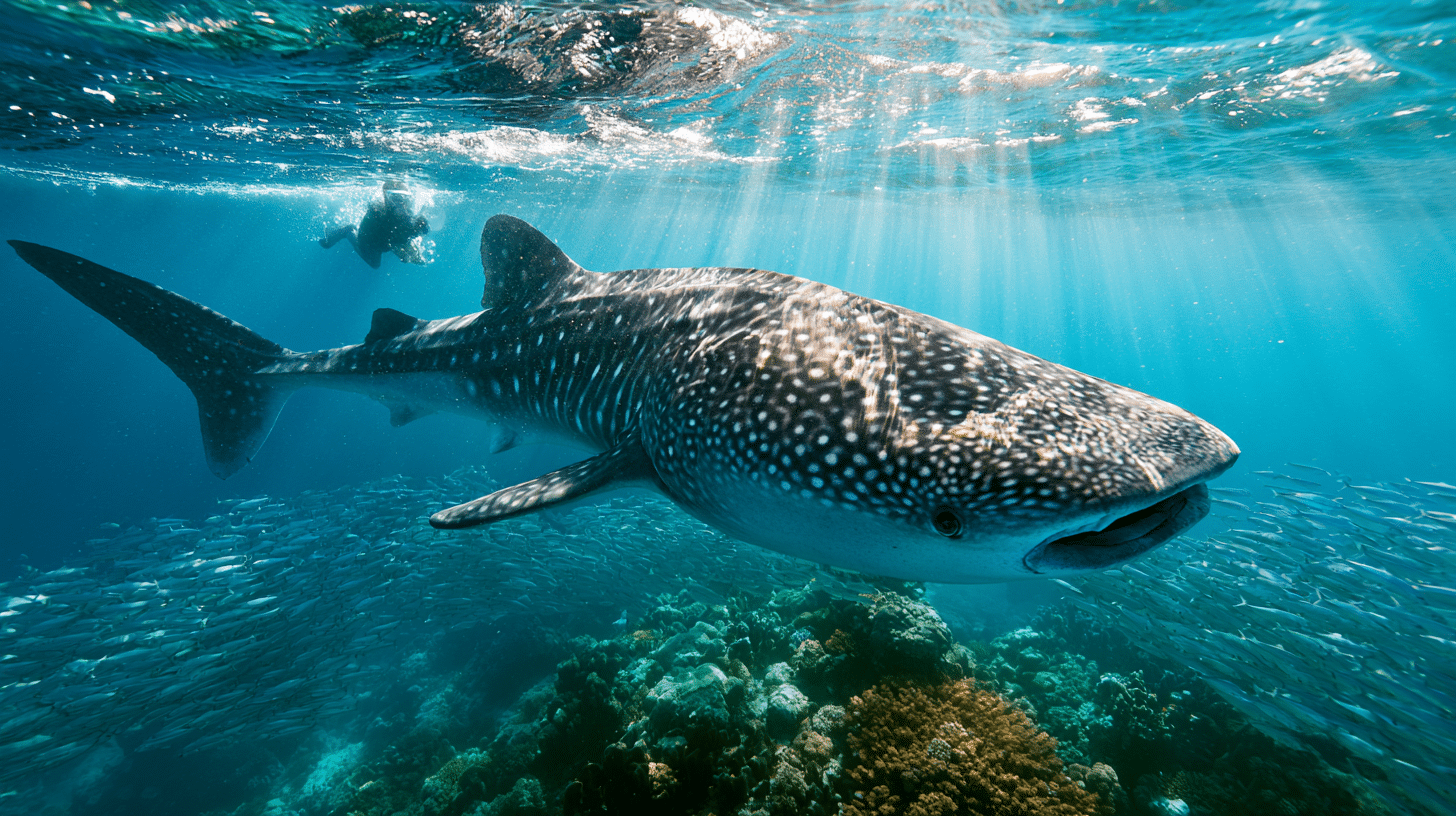
Types of sharks is trending with 20,000+ searches as curiosity about the ocean’s most misunderstood predator spikes again. There are over 500 shark species, and the overwhelming majority pose no threat to humans whatsoever. For travelers, sharks represent one of the most extraordinary wildlife encounters available anywhere on the planet.
The Shark Species Travelers Actually Encounter
- Whale shark — The largest fish on earth at up to 40 feet, and a filter feeder that eats plankton. Completely harmless and utterly astonishing to swim alongside.
- Reef shark — Blacktip, whitetip, and grey reef sharks are the most commonly seen species on tropical dives. Small, cautious, and almost entirely uninterested in humans.
- Nurse shark — Docile bottom-dwellers often found resting under ledges. Frequently encountered by snorkellers in the Caribbean.
- Hammerhead — Schooling scalloped hammerheads gather in enormous numbers at certain seamounts, one of diving’s great spectacles.
- Great white — The apex predator, encountered from the safety of a cage in a handful of locations worldwide.
- Tiger shark — Large and genuinely powerful, encountered on controlled dives in the Bahamas and Fiji.
8 Best Shark Diving Destinations in the World
- Isla Mujeres, Mexico — The largest whale shark aggregation on earth gathers here between June and September. Snorkelling only, no diving required.
- Ningaloo Reef, Australia — Whale sharks from March to July on a UNESCO-listed fringing reef you can swim to from the beach.
- Cocos Island, Costa Rica — Schooling hammerheads in numbers seen almost nowhere else. A liveaboard-only destination 340 miles offshore.
- Galápagos, Ecuador — Darwin and Wolf islands offer hammerheads, whale sharks, and Galápagos sharks in the same dive.
- Tiger Beach, Bahamas — The world’s most reliable tiger shark encounter, in warm shallow water with excellent visibility.
- Gansbaai, South Africa — The classic great white cage diving destination, near Cape Town.
- Fakarava, French Polynesia — The south pass holds hundreds of grey reef sharks in a single channel. A UNESCO biosphere reserve.
- Beqa Lagoon, Fiji — Up to eight shark species on a single dive site, including bull sharks.
Boat decks get cold and windy even in the tropics between dives. Our Premium Hoodies at Around The World In A Rush are the right layer for early starts and long crossings. Rep your destination with the Flag & Country Pride Collection at Around The World In A Rush.
Frequently Asked Questions
Q1: Is shark diving actually safe?
Shark diving with a reputable, licensed operator is remarkably safe. Incidents are extraordinarily rare, and the species most commonly encountered on organised dives — whale sharks, reef sharks, nurse sharks — have essentially no history of unprovoked attacks on divers. Choose operators with strong safety records and established briefing protocols, follow instructions precisely, avoid wearing high-contrast jewellery, and never touch or chase the animals. Cage diving with great whites adds a physical barrier for the species that warrants one.
Q2: Do I need a scuba certification to swim with whale sharks?
No. Most whale shark encounters, including the major aggregations at Isla Mujeres in Mexico and Ningaloo Reef in Australia, are snorkelling experiences conducted at the surface. Many locations actually prohibit scuba for whale shark tours, as bubbles can disturb the animals. You need to be a confident swimmer and comfortable in open water, but no certification is required. For hammerheads and reef shark dives at depth, a standard open water certification is the minimum and advanced is often recommended.
Q3: When is the best time of year for shark diving?
It depends entirely on species and location. Whale sharks at Isla Mujeres run June to September; Ningaloo runs March to July. Cocos Island hammerheads peak June to November during the rainy season when nutrient-rich water draws them in. Great whites at Gansbaai are most reliable May to September in the southern winter. Tiger Beach in the Bahamas is best October to January. Always check the specific seasonal window for your target species before booking, as these encounters are highly seasonal.
3 Essential Resources
- The Shark Trust — Species identification guides and conservation information.
- PADI — Find certification courses and reputable dive operators worldwide.
- IUCN Red List — Conservation status of every shark species, and why responsible operators matter.
Conclusion
Sharks kill roughly ten people a year worldwide. Humans kill approximately 100 million sharks a year. Diving with them responsibly, through operators who fund conservation, is one of the most powerful things a traveler can do — and one of the most extraordinary experiences available anywhere on earth.
👉 Gear up at Around The World In A Rush — travel apparel for people who explore the whole world.
Tags: #Sharks #SharkDiving #WhaleShark #ScubaDiving #Galapagos #CocosIsland #Fiji #MarineConservation #TravelTrends2026 #AroundTheWorldInARush